The Widest Range of Marine Equipment & Spare Parts Under One Roof

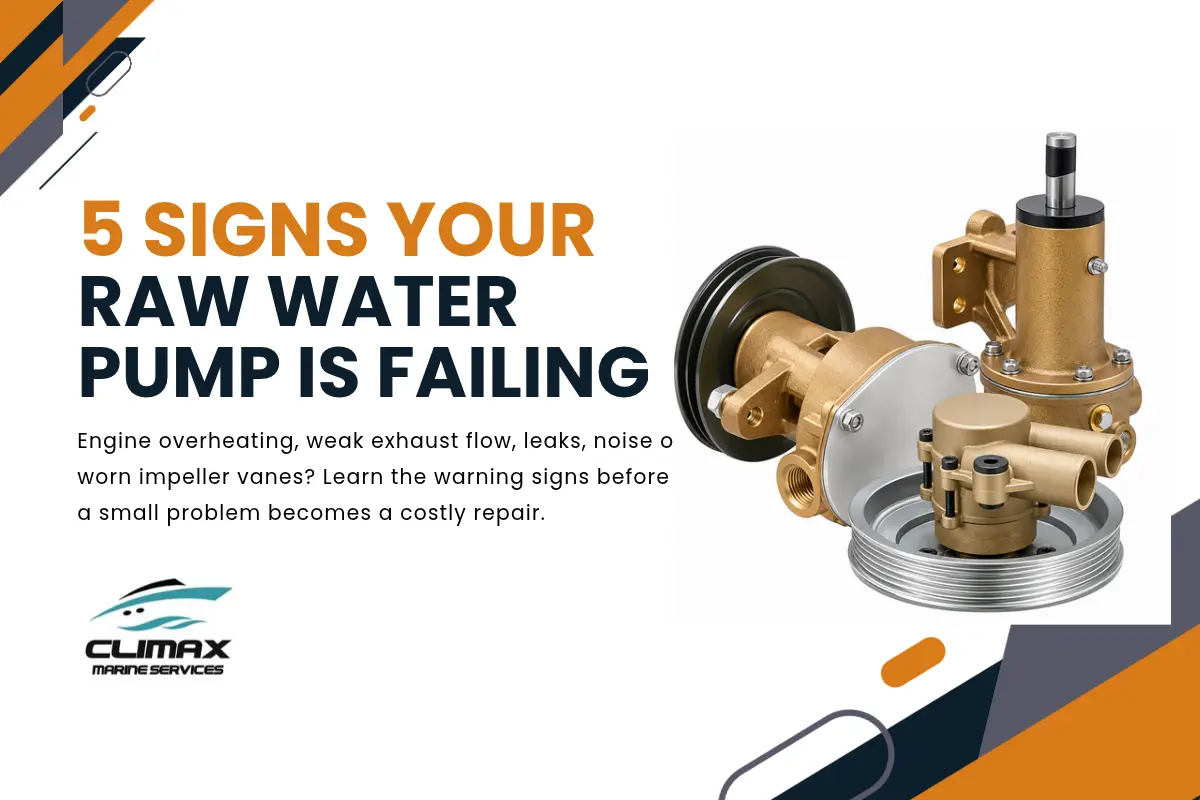
5 Signs Your Boat’s Raw Water Pump Is Failing

5 Signs Your Boats Raw Water Pump Is Failing

5 Signs Your Boat's Raw Water Pump Is Failing

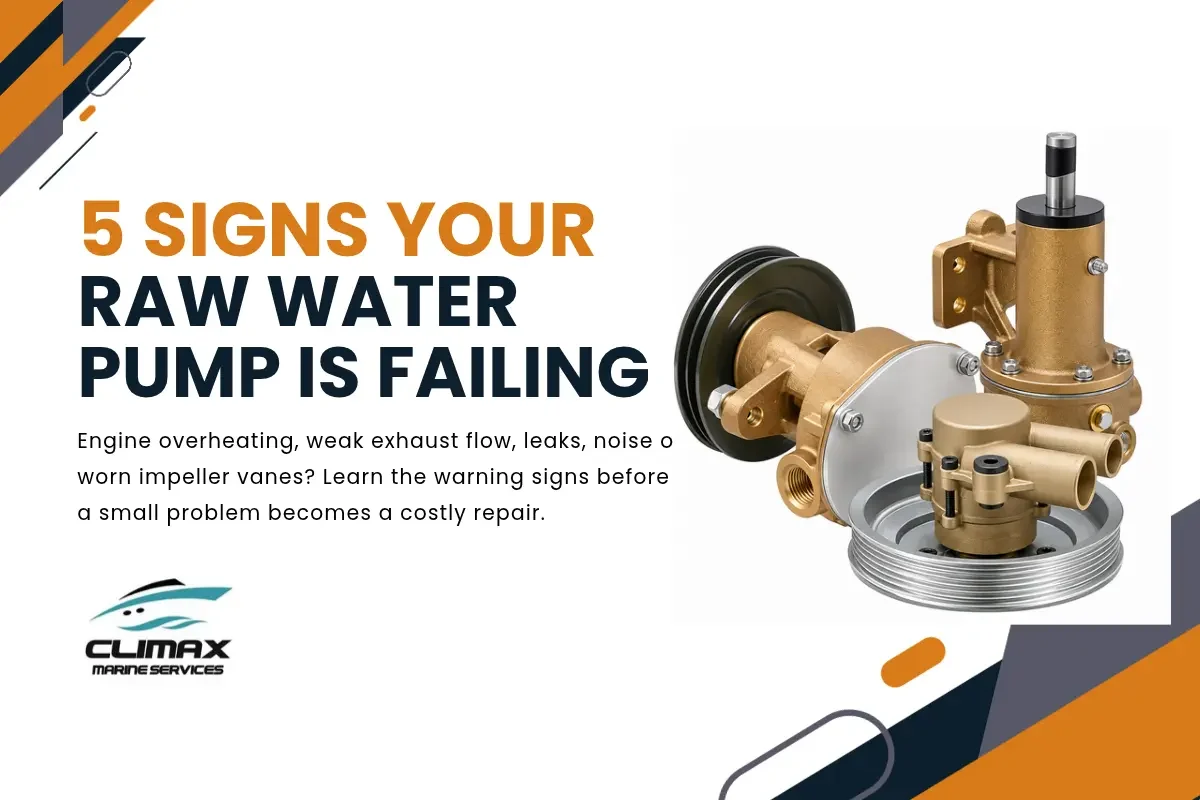
Your raw water pump is one of the smallest parts in the engine room, but it does one of the most important jobs on board. It draws seawater into the boat and pushes it through the heat exchanger to keep your engine or generator cool. When it starts to fail, the engine can overheat within minutes, and a small repair can quickly turn into an expensive one.

The good news is that a failing pump almost always gives warning signs first. Here are the five most common symptoms of a bad water pump on a boat, what causes them, and what to do next.

How a Marine Raw Water Pump Works

Most boats use a flexible impeller pump driven by the engine through a belt, pulley or gear. As the rubber impeller spins, its vanes bend against a cam inside the pump body. This creates suction that pulls seawater in through the seacock and strainer, then pushes it out to cool the engine before it leaves through the exhaust.

Because the impeller is made of rubber and the pump works in salt water, wear is normal. Knowing the signs of a water pump going bad helps you replace parts before they cause damage.

marine raw water pumps

1. Boat Engine Overheating or Running Hot

The most common sign is a rising temperature gauge. If your boat motor is overheating, especially at idle or high RPM, the pump may not be moving enough water.

An inboard boat engine overheating is never something to ignore. Reduce speed, check the gauge and, if the temperature keeps rising, shut the engine down safely and inspect the cooling system. Continuing to run a hot engine can damage the head gasket, exhaust hoses and the engine itself.

2. Weak or No Water Flow from the Exhaust

When the engine is running, you should see a steady flow of water coming out of the exhaust. If the flow is weak, comes in spurts, or stops completely, the pump is struggling.

Before blaming the pump, check that the seacock is open and the seawater strainer is clean. A blocked strainer causes the same symptoms. If both are clear and the flow is still weak, the pump or its impeller is the likely cause.

3. Leaks Around the Pump

Drips of water under the pump are a classic water pump failure symptom. Most pumps use a mechanical seal or lip seal to keep seawater from leaking along the shaft. Over time, these seals wear out.

Look for:

  • Water dripping from the weep hole under the pump body
  • Salt crust or white residue around the pump
  • Rust or corrosion on nearby parts

A small leak can quickly become a big one, and salt water reaching the bearings will damage them too.

4. Unusual Noises: Squealing, Grinding or Rattling

A healthy pump runs quietly. If you hear squealing, grinding or rattling from the pump area, the bearings or shaft may be worn. On belt-driven pumps, a squeal can also mean a loose or worn belt or a bad pulley.

Noise usually means internal wear, so it’s best to inspect the pump as soon as possible rather than waiting for a full failure.

5. Worn, Cracked or Missing Impeller Vanes

The impeller is the part most likely to fail. Water pump impeller failure symptoms include overheating and low exhaust flow, but the only sure way to know is to open the pump cover and look.

Replace the impeller if you see:

  • Cracked or torn vanes
  • Missing pieces of rubber
  • Vanes that stay bent in one direction
  • A hard, dry or swollen rubber surface

If pieces are missing, find them. Broken vanes can travel into the heat exchanger and block it. Our servicing your marine generator explains how to change it step by step.

What Causes a Raw Water Pump to Fail?

The most common causes are:

  • Running dry: Starting the engine with the seacock closed or the strainer blocked can destroy an impeller in seconds.
  • Debris and sand: Shallow water, sand and marine growth wear out the impeller and seals faster.
  • Age: Rubber impellers harden over time, even when the boat isn’t used.
  • Worn seals and bearings: Constant contact with salt water wears them out over the years.
  • Hot climate: High water temperatures in the UAE and GCC put extra load on the whole cooling system.

Repair or Replace Your Raw Water Pump?

If the pump body and shaft are in good condition, a new impeller, gasket and seal kit is often enough. But if the body is corroded, the shaft is worn, or the pump leaks again soon after a repair, a complete replacement is the safer choice.

When choosing a replacement, check the part number on your old pump. Most marine pumps can be matched by their original number (Jabsco, Johnson, Sherwood, Volvo Penta, Kohler, Onan and others), along with the port size and drive type: pulley, gear or flange mount.

At Climax Marine, we stock replacement engine cooling pumps, impellers and service kits for marine engines and generators. Browse our boat generator and engine parts or send us your old pump number, and our team will find the right match.

Tips to Make Your Raw Water Pump Last Longer

  • Check the impeller at least once a year, and carry a spare on board
  • Clean the seawater strainer regularly
  • Always open the seacock before starting the engine
  • Watch the exhaust water flow every time you start up
  • Replace seals at the first sign of a leak
  • Service the full cooling system before the busy season, and follow a regular boat maintenance checklist.

Need Help with Your Boat's Cooling System?

  • Check the impeller at least once a year, and carry a spare on board
  • Clean the seawater strainer regularly
  • Always open the seacock before starting the engine
  • Watch the exhaust water flow every time you start up
  • Replace seals at the first sign of a leak
  • Service the full cooling system before the busy season

Boat Air Conditioner FAQs

The most common causes are a blocked strainer, no water flow from the pump, a dirty filter or low refrigerant.

Most manufacturers recommend once a year or every 200–300 engine hours, whichever comes first. Boats used often in warm water may need it sooner.

No. Running with poor cooling can overheat the engine and cause serious damage. Shut down and inspect the cooling system first.

This often points to a worn impeller. It may move enough water at high RPM but not at low RPM. A partly blocked strainer or heat exchanger can cause the same problem.

The raw water pump pulls in seawater from outside the boat. On engines with closed cooling, a separate fresh water pump circulates coolant inside the engine, and the seawater cools it through the heat exchanger.

Yes. We support both marine air conditioning and refrigeration systems, from parts supply to installation and repair.

SHARE

Related Products

Request a Quote

Need Help? Chat with us