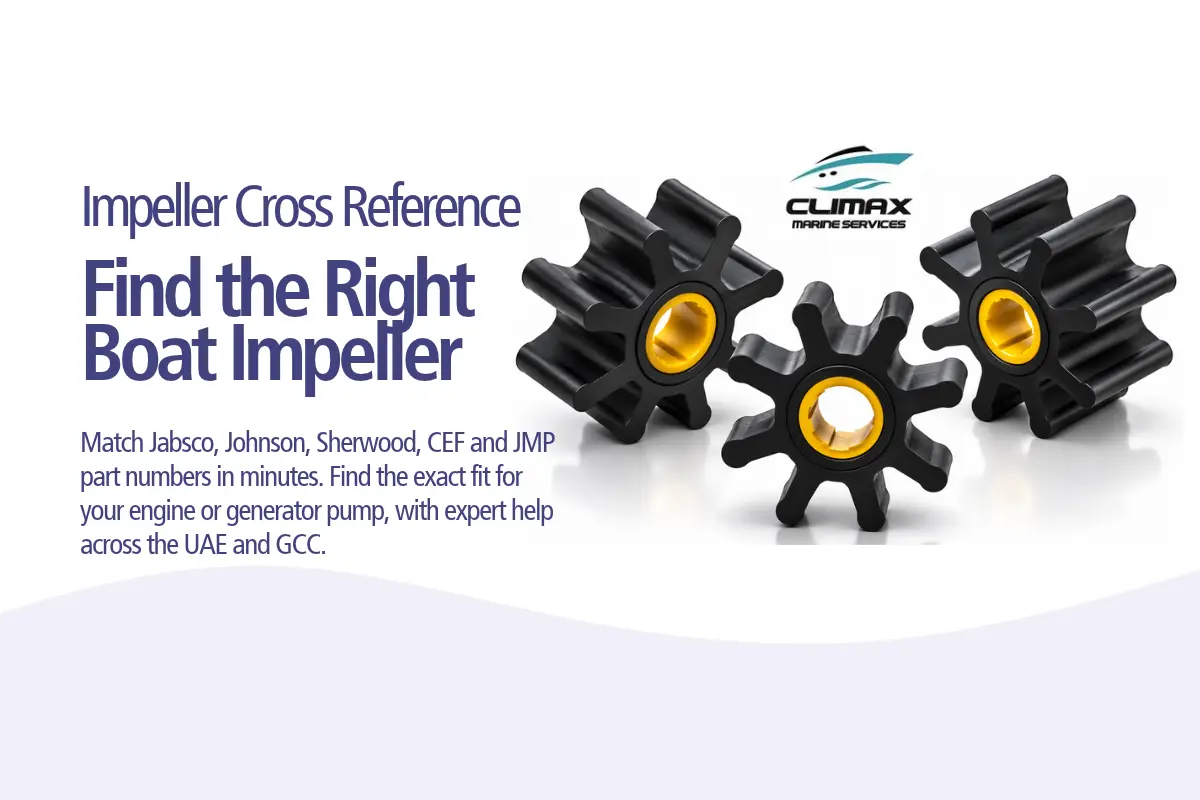
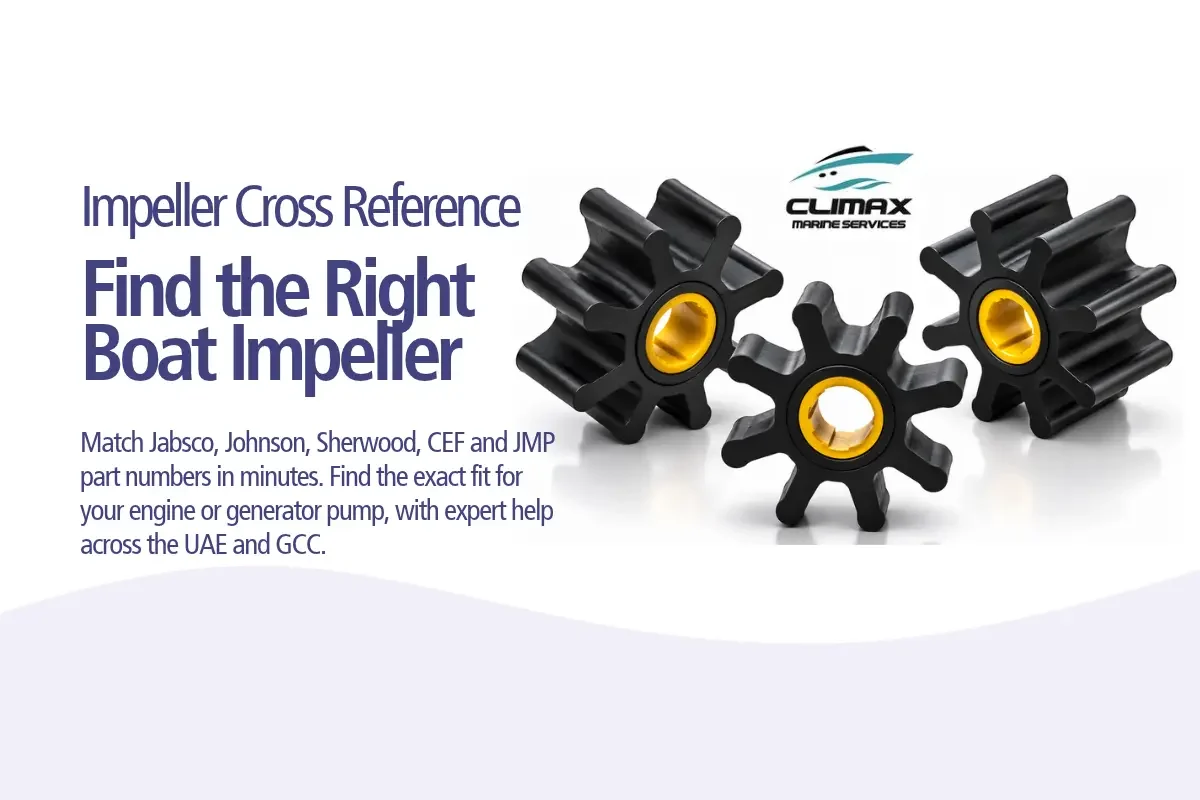
Impeller Cross Reference: How to Find the Right Boat Impeller Using Your Part Number
When your boat’s impeller wears out, the fastest way to find a replacement is by its part number. But Jabsco, Johnson, Sherwood, CEF, JMP, and engine makers such as Volvo Penta and Yanmar often sell the same impeller under different numbers. An impeller cross reference helps you match these numbers, so you get the right part the first time, without guessing.
In this guide, we explain how to find your impeller number, how to read a cross reference chart, and what to measure if the number is missing.
Why an Impeller Cross Reference Matters
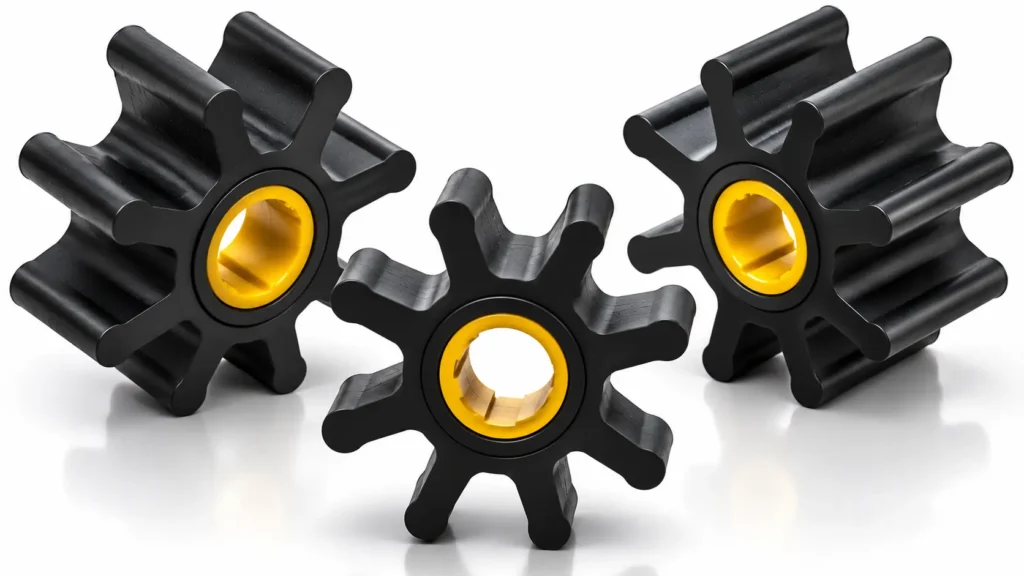
A marine impeller only works properly if it is an exact fit. If the diameter, width, shaft size or drive type is wrong, the impeller will not seal inside the pump housing, water flow drops, and the engine or generator can overheat.
Many boat owners know only one number, usually from the old impeller, the pump or the engine manual. An impeller cross reference connects that number to equivalent parts from other brands. This gives you more choice, better availability and often a better price, while still getting the correct fit.
Where to Find Your Impeller Part Number
Look in these places, in this order:
On the old impeller. Many impellers have the brand and number moulded into the hub or the side of the rubber.
On the pump body. The pump model, such as a Jabsco or Johnson number, is often stamped on the housing or the end cover.
In the engine or generator manual. Look in the raw water pump section, under spare parts.
On the packaging or service kit from the last replacement.
From your engine number. If nothing else works, the engine make and model can help identify the correct pump and impeller.
How to Read an Impeller Cross Reference Chart
An impeller cross reference chart lists one impeller and all the numbers it replaces. For example, a Jabsco impeller cross reference chart might show the Jabsco number in the first column, then the matching Johnson, Sherwood, CEF and JMP numbers.
Quick tip: if you find your number in any column, every number in that row is the same impeller.
Some brands also use number endings to show the rubber type. On many listings, a Jabsco number ending in -0003 or a Johnson number ending in -9 is the nitrile version, which is oil and fuel resistant. A number ending in -0001 or -1 is usually the standard neoprene version. Always check you are ordering the right material for your application.
How to Read an Impeller Cross Reference Chart
Lorem ipsum dolor sit amet, consectetur adipiscing elit. Ut elit tellus, luctus nec ullamcorper mattis, pulvinar dapibus leo.
Each product page on our website also lists the matching Volvo Penta, Yanmar, Onan, Kohler, Perkins and other engine numbers.
No Part Number? Measure Your Impeller
If the number has worn off, you can still find the right impeller by measuring it. Check:
Impeller diameter: the full width across the blade tips.
Width (height): the length of the impeller from one face to the other.
Shaft diameter: the inside size of the hub.
Number of blades: usually 6, 8, 9, 10 or 12.
Drive type: how the impeller connects to the pump shaft.
The most common drive types are:
Spline drive (our K-Series): grooves inside the hub.
Key drive (our J-Series): a slot for a small metal key.
Single flat drive (our H-Series): one flat side on the shaft.
Double flat drive (our M-Series): two flat sides.
Use these measurements with an impeller size chart, or send them to our team, and we will match them for you.
Engine and Generator Impellers
Most raw water pumps on boats use a flexible rubber impeller, whether they are fitted to the main engine or a marine generator. Generator impellers for Kohler, Onan and Fischer Panda sets are often smaller, but they wear just as quickly, so it is worth keeping a spare for each pump on board.
Impeller Cross Reference Tips
Always compare two or more measurements, not just the number, before installing.
Check whether you need neoprene or nitrile rubber.
Buy a complete kit with the gasket or O-ring when possible, because an old gasket can leak.
Write the matching numbers in your boat logbook for next time.
Need Help Finding Your Impeller?
With over 40 years of experience in marine parts, Climax Marine helps boat owners across the UAE and GCC find the right impeller, pump and service kit. Send us your part number, pump model or a photo of your old impeller, and we will do the impeller cross reference for you.
Boat Impeller FAQs
New to boat impellers? Here are quick answers to the questions boat owners ask us most, from what the impeller does to when it’s time to replace it.
The most common sign is a weak or missing tell-tale stream, the small jet of water from the side of the outboard. Other warning signs include the engine running hotter than usual, an overheat alarm, or steam from the exhaust. The impeller sits in the water pump inside the lower unit, so it’s easy to forget until it fails. Most outboard makers recommend changing it every one to two seasons, or sooner if the boat has run in sand or shallow water.
Running without water is one of the fastest ways to destroy an impeller. The rubber vanes rely on water for cooling and lubrication, so without it they heat up, crack and can break apart very quickly. This usually happens when the seacock is left closed, the seawater strainer is blocked, or the engine is started on land without a water supply. Always open the seacock and check the strainer before starting, and keep a spare impeller and gasket on board in case one fails at sea.
It depends on your engine and pump. On some boats the pump cover is easy to reach and the job is simple, while on others the pump is hard to access or needs special tools. Always follow your engine or pump manufacturer’s manual, and use the correct impeller and gasket for your exact model. If you’re not sure, our technicians can supply the right part and fit it for you anywhere in the UAE.
 Skip to content







 Optimized by Seraphinite Accelerator