Impeller replacement is one of the simplest and most important maintenance jobs on any boat. A boat impeller is a small rubber part inside your raw water pump, but it keeps your engine, generator and marine air conditioner cool. When a marine impeller fails, temperatures rise fast, and boat engine overheating can turn a great day on the water into an expensive repair. This guide explains what an impeller does, the signs of a bad impeller and when to replace your boat impeller.
What Is a Marine Impeller?
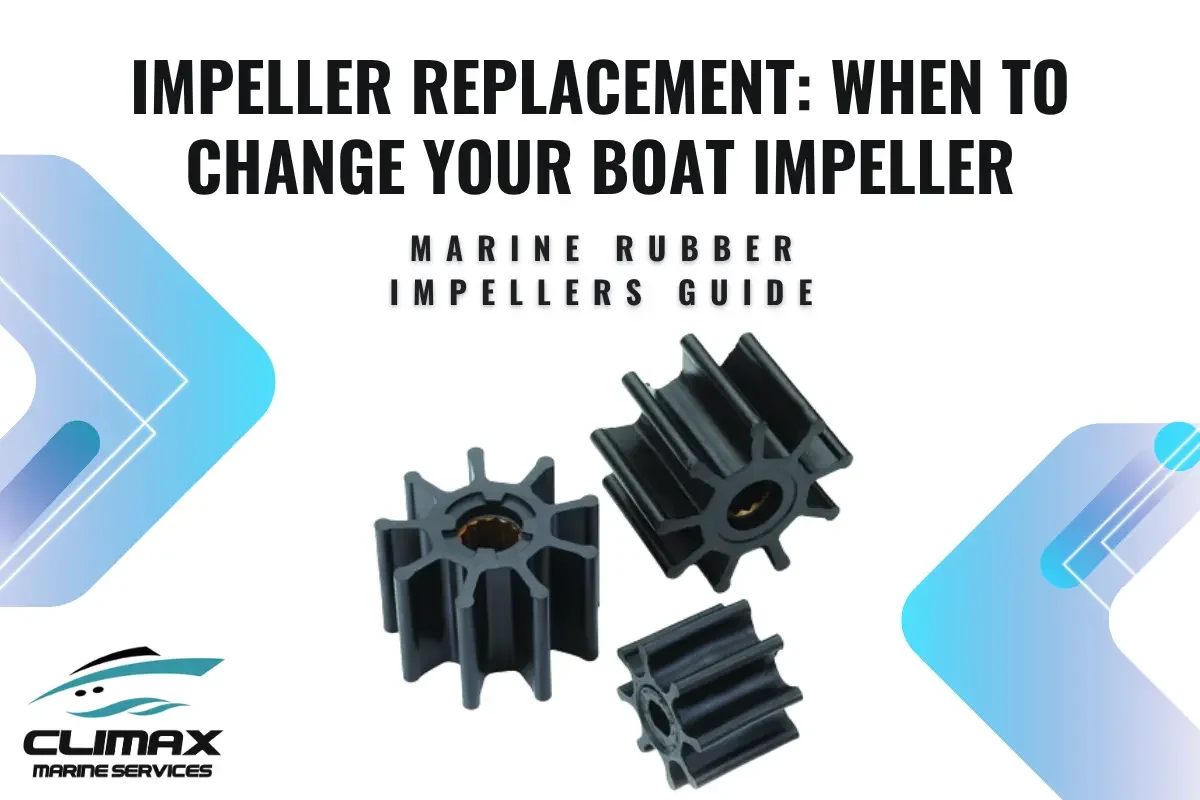
A marine impeller, also called a flexible impeller or rubber impeller, is a wheel with soft rubber vanes that spins inside the water pump housing. As it turns, the vanes bend and straighten, pulling seawater in through the intake and pushing it through the cooling system. The water carries heat away from the engine before flowing back overboard.
You will find a water pump impeller in many places on board:
- Raw water pump impeller for inboard engine cooling
- Outboard impeller inside the lower unit of an outboard motor
- Generator impeller in the generator’s seawater pump
- Impellers in deck wash pumps and marine air conditioning pumps
Because the rubber vanes flex thousands of times every minute, they slowly harden, crack and lose their shape. This is normal wear, and it is why every boat needs a regular impeller replacement.
Signs of a Bad Impeller
Most impeller failure symptoms are easy to spot if you know what to look for:
- Boat engine overheating. A temperature gauge that climbs higher than normal is often the first warning.
- Outboard overheating or a weak tell-tale stream. On an outboard, a weak or missing water stream from the tell-tale outlet usually points to a worn outboard impeller.
- No water from the outboard or exhaust. If no water comes out at all, stop the engine straight away.
- Overheating alarms. Never ignore an alarm. Shut down and check the cooling system.
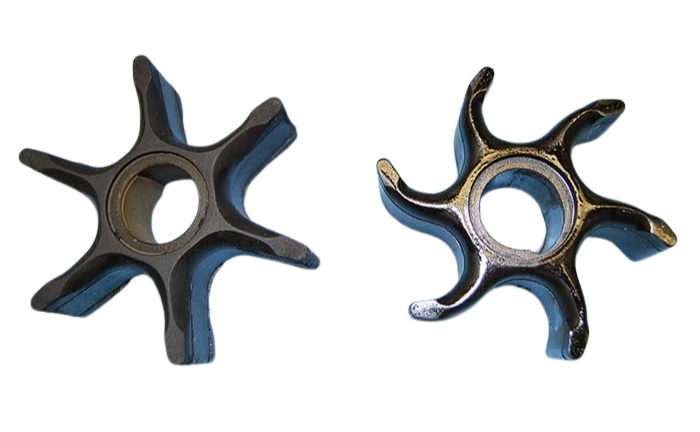
- Cracked, stiff or missing vanes. If you open the pump and see damaged vanes, a rubber impeller replacement is needed.
- Squealing from the pump. This can mean the impeller is running dry or worn out.
If any vanes are missing, find the broken pieces before restarting. Loose rubber can block the heat exchanger or cooling passages and cause more damage.
How Often Do You Need an Impeller Replacement?
So, when should you replace your boat impeller? Most manufacturers and technicians recommend checking it at least once a year and replacing it every one to two seasons, depending on engine hours. Always follow the service interval in your engine, outboard or generator manual.
In the UAE and GCC, warm seawater, sand and marine growth wear impellers faster than in cooler regions. If you use your boat often, or it sits unused for months, check the impeller more often. Rubber can take a set and stick to the pump housing when an engine stays idle for a long time.
Running Dry Destroys Impellers
A flexible impeller depends on water for lubrication. Even 30 seconds without water can damage the vanes. Always open the seacock and clear the strainer before starting the engine.
Impeller Replacement Cost
The impeller replacement cost depends on the engine type, the impeller size and whether the pump cover or wear plate also needs replacing. The impeller itself is usually an affordable part. The real cost comes from ignoring it, because an overheated engine or generator can be far more expensive to repair. Replacing your marine impeller on time is one of the cheapest ways to protect your boat.
Tips for a Successful Impeller Replacement
- Use the correct part number. Impellers vary in size, number of vanes and shaft type. Check the number on the old impeller or in your manual.
- Lubricate the new impeller. Apply a little glycerine or silicone grease, never petroleum grease, before fitting it.
- Inspect the pump cover and wear plate. Replace them if they are scored or worn.
- Fit a new gasket or O-ring to prevent leaks.
- Keep a spare boat impeller on board. It is a small part that can save your trip.
Marine Impellers in the UAE From Climax Marine
Climax Marine stocks a wide range of genuine marine impellers in the UAE, including Jabsco impellers, Johnson impellers, CEF impellers and replacement impellers for Volvo Penta engines. We supply raw water pump impellers, outboard impellers and generator impellers, along with pumps and other marine spare parts.
Not sure which impeller you need? Send us a photo of the old part, the part number or your engine model, and our team will find the right match. We deliver across the UAE and GCC.
Boat Impeller FAQs
New to boat impellers? Here are quick answers to the questions boat owners ask us most, from what the impeller does to when it’s time to replace it.
A boat impeller is the flexible rubber wheel inside the raw water pump. As it spins, its vanes pull seawater in through the hull and push it through the engine’s cooling system or heat exchanger, before it leaves through the exhaust. Without a working impeller, cooling water stops flowing and the engine quickly overheats.
No. A worn, cracked or missing vane can’t be fixed safely, so the impeller is always replaced. If vanes have broken off, find and remove the pieces from the cooling system, because they can block the heat exchanger. When fitting a new one, also check the pump cover gasket and the wear plate.
On outboards, the impeller sits in the water pump inside the lower unit. A weak or missing tell-tale water stream from the side of the motor is often the first sign it needs replacing. Most outboard makers recommend changing it every one to two seasons.
The most common sign is a weak or missing tell-tale stream, the small jet of water from the side of the outboard. Other warning signs include the engine running hotter than usual, an overheat alarm, or steam from the exhaust. The impeller sits in the water pump inside the lower unit, so it’s easy to forget until it fails. Most outboard makers recommend changing it every one to two seasons, or sooner if the boat has run in sand or shallow water.
Running without water is one of the fastest ways to destroy an impeller. The rubber vanes rely on water for cooling and lubrication, so without it they heat up, crack and can break apart very quickly. This usually happens when the seacock is left closed, the seawater strainer is blocked, or the engine is started on land without a water supply. Always open the seacock and check the strainer before starting, and keep a spare impeller and gasket on board in case one fails at sea.
It depends on your engine and pump. On some boats the pump cover is easy to reach and the job is simple, while on others the pump is hard to access or needs special tools. Always follow your engine or pump manufacturer’s manual, and use the correct impeller and gasket for your exact model. If you’re not sure, our technicians can supply the right part and fit it for you anywhere in the UAE.