The Widest Range of Marine Equipment & Spare Parts Under One Roof

Bilge Pump for Boat: Types, Switches and Care

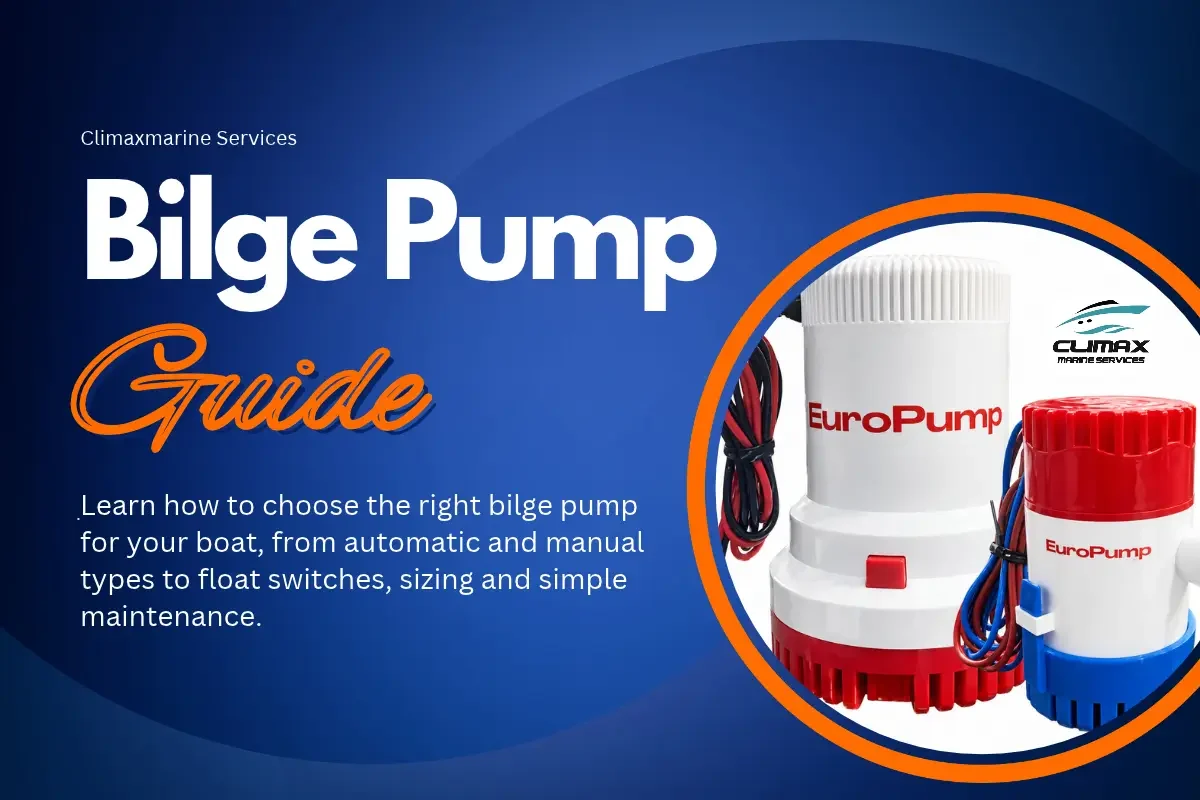
bilge pump for boat guide

Need a Bilge Pump for Boat Safety? A Complete Guide to Types, Switches and Care

Every vessel takes on some water, whether from rain, spray, a leaking seal or a stern gland. A reliable bilge pump for boat safety removes that water before it becomes a problem. Choosing the right marine bilge pump and keeping it in good condition is one of the simplest ways to protect your vessel and everyone on board. This guide explains the main types, how float switches work, how to size a pump, and how to keep it running.

What Does a Bilge Pump Do?

The bilge is the lowest part of the hull, where water naturally collects. A bilge pump sits in this area and pushes the water overboard through a hose and thru-hull fitting. Most vessels use an electric pump as the main system, backed up by a manual pump in case of power failure.

Types of Bilge Pumps

Automatic Models
An automatic bilge pump switches on by itself when water rises, using a float switch or a built-in electronic sensor. It’s the most popular choice because it protects the vessel even when you’re not on board. Some models, often called an auto bilge pump, have the sensor built into the pump body.

Manual and Hand Pumps
A manual bilge pump is operated by a lever or handle and needs no electricity. A hand bilge pump is an essential backup if the batteries go flat or the electric pump fails. Many owners also keep a small portable bilge pump on board for emergencies.

Electric Submersible Pumps
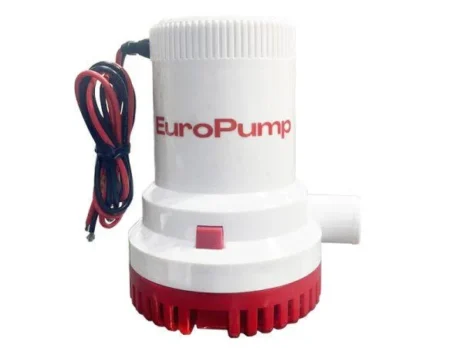
An electric bilge pump is usually a submersible centrifugal pump that sits in the bilge. It moves large volumes of water quickly and is the standard choice on most motorboats and yachts.

Diaphragm Pumps
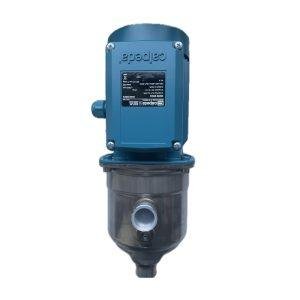
A diaphragm bilge pump is self-priming and can run dry without damage. It handles small debris well and is often fitted on sailing yachts or used for dry bilge systems, which remove the last bit of water a submersible pump leaves behind.

Small and Low Profile Models
A small or low profile bilge pump fits shallow bilges and tight spaces, such as under engines or in narrow hulls. They’re also popular on kayaks, tenders and small fishing boats.

Battery Powered and Solar Bilge Pumps
A battery powered bilge pump has its own power source, which is useful on small boats without a main electrical system. A solar bilge pump keeps a battery charged so the pump stays ready on boats left on a mooring.

Bilge Pump Float Switch: How It Works

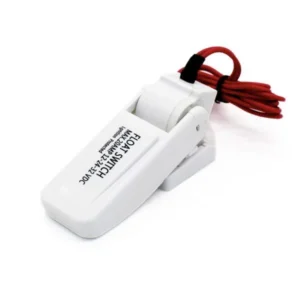
A bilge pump float switch turns the pump on automatically when water lifts the float, and off again when the level drops. It’s what makes an automatic system work.

  • Mechanical float switch: a hinged float that rises with the water level
  • Electronic switch: senses water without moving parts and is less likely to jam

Make sure the bilge pump switch matches your system voltage. A 12 volt float switch is used on most small and mid-size boats, while a 24v float switch suits larger vessels. You can also choose a boat bilge pump with float switch built in, such as a 12v bilge pump with float switch, which saves space and wiring.

12V vs 24V: Which Voltage Do You Need?

Choose a 12v bilge pump if your boat runs on a 12V electrical system, which is common on smaller boats. Larger yachts often use 24V, so a 24v bilge pump is the right match. Using the wrong voltage can damage the motor or reduce performance, so always check your system before ordering.

What Size Bilge Pump Do You Need?

Bilge pumps are rated in gallons per hour (GPH). A 500 gph bilge pump suits small boats and tenders, while larger vessels may need a 2000 gph bilge pump or more. Keep in mind:

  • Real output is lower than the rating, because of hose length, height and voltage drop.
  • Bigger boats should have more than one pump, ideally a smaller one for everyday water and a larger one for emergencies.
  • Use the correct hose diameter, because a hose that’s too narrow reduces flow.

If you’re unsure, our team can recommend the right capacity for your vessel.

Popular Bilge Pump Brands

Boat owners often search for well-known names such as Rule, Johnson, Attwood and Whale. A Rule bilge pump, Johnson bilge pump or Attwood bilge pump are common choices worldwide. At Climax Marine, we stock trusted options including EuroPump and Johnson models. Ask our team about other brands and we’ll help you find the right match.

How to Maintain Your Pump

A pump that hasn’t been checked may fail exactly when you need it. Follow these simple steps, and always refer to your manufacturer’s manual:

  1. Test it regularly. Lift the float switch, or use the test button, and check that the pump runs and water flows overboard.
  2. Clean the bilge. Remove oil, debris, hair and plastic that can clog the strainer or jam the float.
  3. Check the float switch. Make sure it moves freely and isn’t blocked by hoses or wires.
  4. Inspect wiring and connections. Look for corrosion, loose terminals and damaged insulation.
  5. Check the hose and thru-hull. Look for cracks, kinks and loose clamps, and make sure the outlet isn’t blocked.
  6. Keep a backup. Make sure your manual or hand pump works and its handle is easy to reach.

How to Maintain Your Bilge Pump

Signs Your Bilge Pump Needs Replacing

  • The pump runs but moves little or no water
  • It cycles on and off too often
  • The motor is noisy or slow
  • The float switch sticks or doesn’t trigger
  • The pump keeps blowing fuses

Replacing a weak pump early is far cheaper than dealing with flooding damage.

Get the Right Bilge Pump from Climax Marine

With 40+ years of experience, Climax Marine supplies marine bilge pumps, float switches and fittings for boats and yachts across the UAE and GCC. Browse our [bilge pumps] range, read our guide to [choosing a bilge pump], or call +971 56 761 2345 and our team will help you find the right model and size.

Bilge Pump FAQs

421.2Choosing or fixing a pump? Here are quick answers to the questions boat owners ask most, from pump types and float switches to testing and troubleshooting.

The best bilge pump for a small boat is usually a compact automatic model with a built-in float switch, backed up by a hand pump. Choose one that matches your voltage and bilge space.

Ideally both. An automatic pump protects the vessel when you’re away, and a manual pump is a backup if the power fails.

Test it before every trip, and check it regularly if the boat is left in the water for long periods.

Common causes are a stuck float switch, a leak letting water in continuously, or a non-return problem letting water flow back. Check the float and look for the source of the water.

Yes. Most manual pumps can be made automatic by adding a separate float switch, as long as it matches your voltage and current rating.

A dry bilge system uses a diaphragm pump to remove the small amount of water a submersible pump leaves behind, keeping the bilge clean and odour-free.

SHARE

Related Products

Request a Quote

Need Help? Chat with us